Clinical Impact
TPMD is a versatile tool used across multiple clinical fields to improve patient outcomes through objective data.
If you can’t measure it, you can’t improve it,
About the tongue
The tongue is a complex muscular organ located in the oral cavity, at the junction of the respiratory and digestive tracts. Due to its position and neuromuscular activity, it plays a direct role in vital functions such as breathing, swallowing, chewing, and phonation.
The strength, endurance, and symmetry of the tongue play a key role in essential functions: swallowing, phonation, chewing, and breathing.
The tongue also influences the temporomandibular joints (TMJs), the growth of the face and mandible, and the craniocervical posture. It therefore acts as a major determinant of orofacial biomechanics.
Tongue-Tech and Tongue Lab technologies have been developed to assess, train, and optimize tongue functions and position in order to restore lasting physiological functioning of orofacial functions.
Objective measurement of tongue strength and endurance with a standardized tool, such as the Tongue Pressure Measurement Device (TPMD), provides quantifiable insights about the patient’s initial functional status.
This data not only guides treatment planning but also allows for objective monitoring of clinical progress during follow-up visits, promoting evidence-based interdisciplinary practices and enhancing the reliability of therapeutic interventions.
Additionally, evidence of small but rapid improvements serves as a strong motivation for patients.
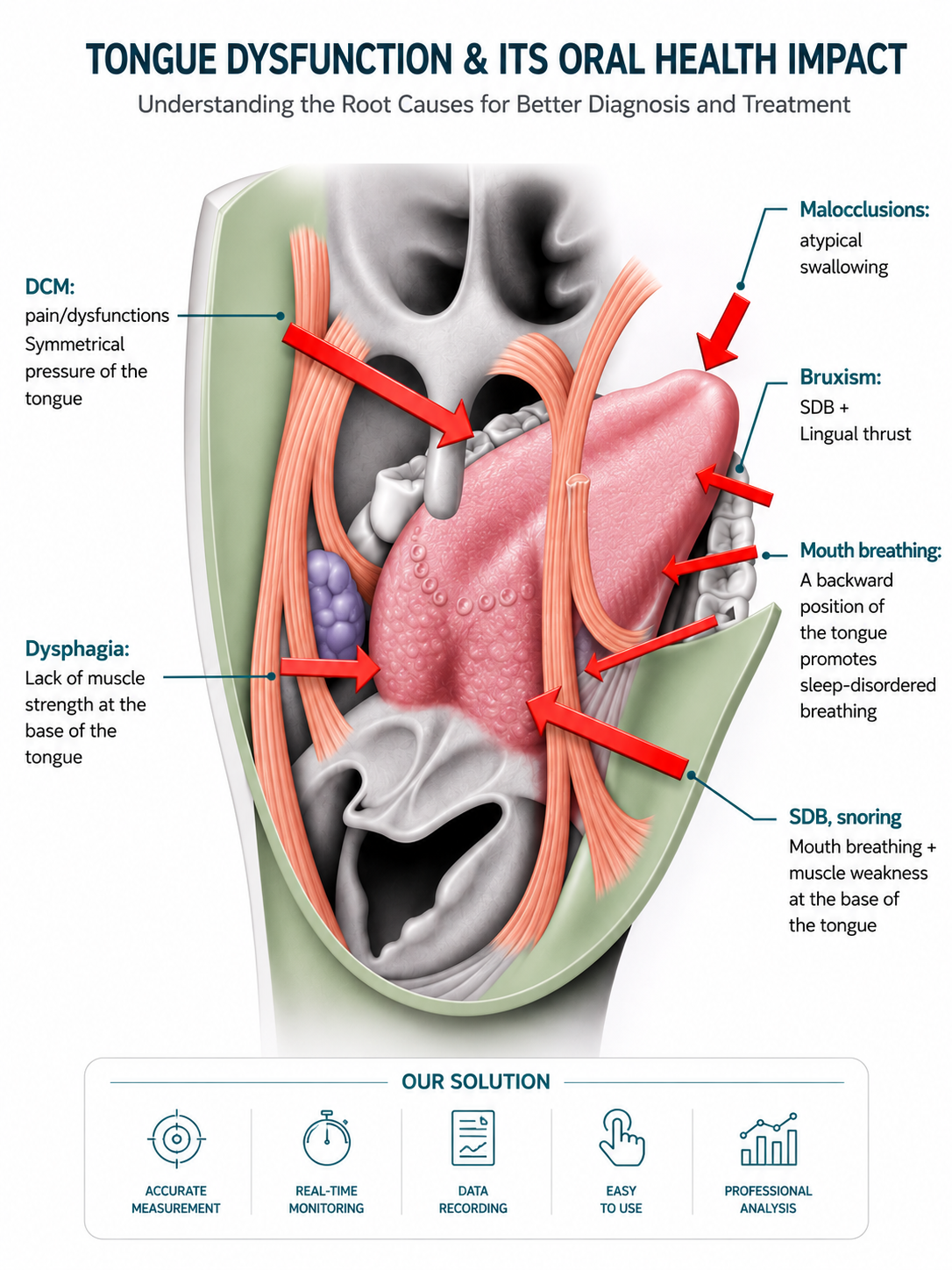
Main Clinical Fields
Targeted Interventions
Dysphagia
The tongue is responsible for bolus formation, transport, and triggering the swallowing reflex. Tongue weakness is a major risk factor for aspiration and malnutrition in patients with stroke, Parkinson’s disease, or head and neck cancer.
Sleep-Disordered Breathing
Poor tongue tone is often associated with obstructive sleep apnea (OSA). Objective measurements help clinicians assess the efficacy of myofunctional therapy as a complement to CPAP or oral appliances.
Orthodontics
Lingual posture and function are key determinants of craniofacial development. TPMD aids in identifying tongue thrust and low tongue posture to improve orthodontic outcomes and stability.
TMD
Tongue-to-palate force can influence the muscular balance of the stomatognathic system. Measuring tongue function provides new insights into the management of temporomandibular disorders.